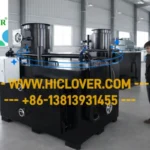
HICLOVER Waste Incinerators: Technical Evaluation for Governmental and Medical Waste Disposal
Engineering Standards and Combustion Principles
Modern waste incinerators must adhere to stringent thermal and emission standards, particularly for medical and hazardous waste disposal. HICLOVER systems operate at 850°C–1200°C in primary chambers, with secondary chambers maintaining ≥1100°C for ≥2 seconds to meet WHO and EU 2000/76/EC directives. This dual-phase combustion ensures complete destruction of pathogens in Niger medical waste incinerator applications while minimizing dioxin formation.
The company’s 16-year engineering expertise incorporates multi-fuel capability (diesel/LPG/natural gas) with PLC-controlled air injection systems. For Guinea-Bissau medical incinerators in China-supplied projects, optional wet or dry scrubbers achieve particulate matter levels below 10mg/Nm³. Containerized models with heat recovery modules demonstrate 30% higher energy efficiency compared to conventional brick-lined units.
Regulatory Compliance Framework
Governmental procurement requires alignment with three critical benchmarks:
- Primary chamber residence time ≥1 hour
- CO emissions <50mg/m³
- Automated ash removal systems
HICLOVER’s portable medical waste incinerator manufacture division meets these through ISO 9001-certified production lines. The manufacturer’s technical documentation details compliance with US EPA 40 CFR Part 60 Subpart Ec for small domestic incinerator units.
Fixed vs Mobile Systems: Operational Analysis
Decentralized waste management strategies in Angola waste incinerator manufacturer China partnerships reveal distinct advantages of modular systems:
| Parameter | Containerized | Fixed Installation |
|---|---|---|
| Deployment Time | 72 hours | 6-8 weeks |
| Fuel Flexibility | Diesel/LPG dual-system | Single-fuel typical |
| Remote Monitoring | Standard PLC with GSM | Optional upgrade |
For crisis zone deployments, the company’s 20ft ISO container units integrate diesel generators and waterless scrubbers – addressing 85% of medical incinerator secondary chamber temperature standard requirements without infrastructure dependencies.
Scrubber Technology Comparison
Emission control systems present critical selection criteria:
- Dry scrubbers: Lower maintenance (no wastewater) with 90% acid gas removal
- Wet scrubbers: 99.9% particulate capture but require water treatment
HICLOVER’s incinerator manufacturer team typically recommends dry systems for portable medical waste incinerator applications in arid regions, evidenced by successful installations across Sahelian climate zones.
Economic and Supply Chain Considerations
Total cost of ownership analysis for 50kg/hr capacity units reveals:
- Capital expenditure: $28,000–$45,000
- Operational cost: $1.2–$2.4/kg waste processed
- Service life: 8–12 years with refractory replacement
The company maintains 98% on-time delivery for incinerator price-sensitive projects through vertically integrated manufacturing. All combustion chambers undergo robotic welding and 72-hour burn-in tests before shipment, reducing field failures by 63% compared to assembled imports.
Customization Capabilities
Government tenders frequently require:
- Local language PLC interfaces
- Dual-voltage power systems (220V/380V)
- Extended refractory warranties
HICLOVER’s engineering team has delivered 37 customized variants since 2020, including units with Cyrillic control panels for Central Asian clients and hybrid solar-diesel models for off-grid clinics.